What Are the Catholic Pilgrimage Sites in Ireland?
Catholicism in Ireland has a distinctive character; it is one of the few places where the faith grew without direct Roman influence. Join Select International Tours on a Catholic pilgrimage to Ireland, England, and Scotland. Other than the shrines you will visit and the saints you will learn more about, you will experience lush countryside and enjoy artisanal spirits.
Which Catholic Pilgrimage Sites Will You Visit in Ireland?
On a rainy, windy evening in 1879, a dazzling light lit up the St John the Baptist Church in Knock, County Mayo, in Ireland. Silently floating in the air at the south gable, the villagers recognized the Blessed Virgin Mary. St John the Evangelist hovered on her right, and St Joseph on her left.
Though it rained heavily, the gable and the ground were dry. The witnesses also observed an altar, the Lamb of God standing before a cross, and a multitude of angels suspended in the air. Our Lady of Knockgazed toward Heaven while praying; St Joseph bowed his head toward her; and St John, dressed as a bishop, held an open book and gestured as if preaching. The vision lasted for approximately two hours.
The small village has since become a destination for pilgrims from all over the world. The Marian and Eucharistic shrine is in the Basilica of Our Lady of Knock, Queen of Ireland. Pope Frances designated the Knock Marian Shrine in Ireland the country’s International Eucharistic and Marian Shrine in 2021.
Kylemore Abbey: A Benedictine Refuge
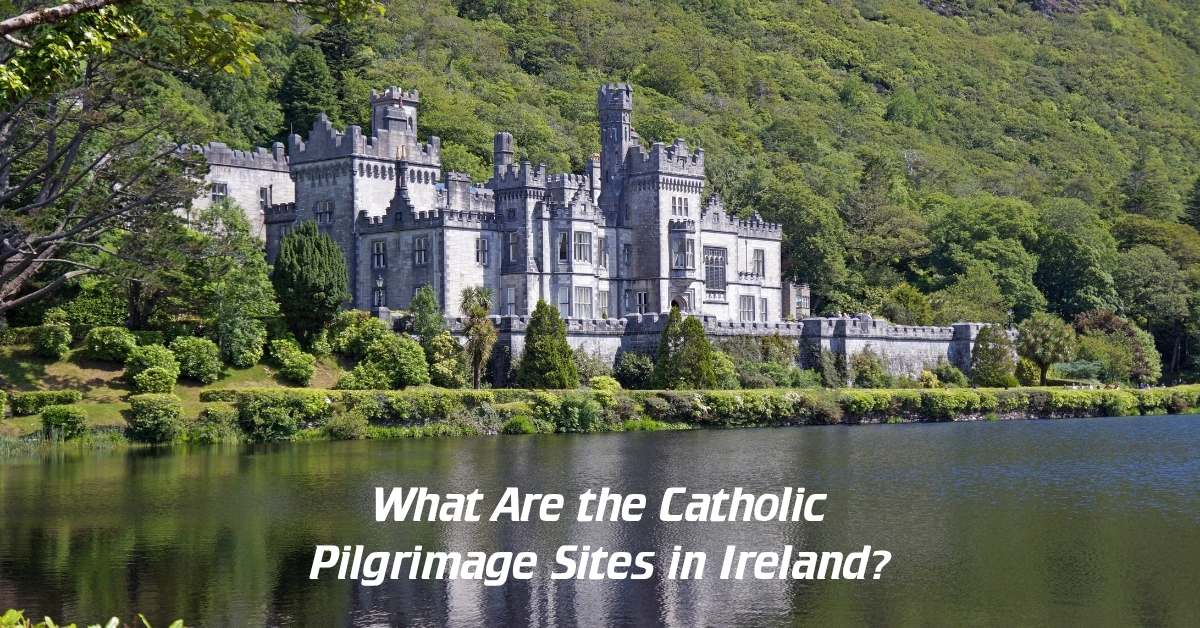
We’ll also take you to Kylemore Castle in Connemara, County Galway, Ireland, which was constructed between 1864 and 1871. It was private property to start with; Kylemore Abbey became a monastery in 1920 to house Benedictine nuns who fled Belgium during World War 1. It became the property of the English Benedictine Congregation in 2022, and the congregation now holds it in its custody for the Irish nation.
You will have the opportunity to view the lavish rooms of this functioning monastery and spiritual retreat, enjoy the Victorian Walled Garden, and visit the Gothic Church, which is a five-minute walk away from the Abbey.
Ireland’s Countryside and Culture Highlights
The sheer Cliffs of Moherin County Clare stretch 14 kilometers and offer magnificent views of the Twelve Pins mountains, Aran Islands, and the ocean. Breathtaking scenery, safe clifftop walkways, and O’Brien’s Tower (built in the 19th century) await you. What’s the next stop on our adventure?
Cobh, Blarney, and Dublin Experiences
Cobh (pronounced cove) is a harbor town in County Cork, with strong ties to emigration and the history of the Titanic. You can visit the neo-Gothic St. Colman’s Cathedral that overlooks the town’s colorful buildings and the dockside where countless Irish men and women once departed for new lives overseas.
Our tour of Ireland, England and Scotlandwill take you to see the Blarney Stone and the Jameson Distillery in Dublin, where you’ll experience the warm hospitality Ireland is known for. Soak up the customs and characteristics of the people and the places.
The English Reformation and Which Christian Sites We’ll Visit
Catholic and Protestant martyrs bore witness to their convictions during the English Reformation. Many chose to die rather than disobey their God. As monarchies changed and the crown passed from one to another, prevailing religious attitudes shifted over more than 150 years.
The pilgrimage sites we’ll visit are linked to historic times. Stand where Protestants and Catholics were tortured and executed during that time because their loyalty to their religion was more important to them than the state’s demands. Their devotion to their faith resembled that of St. Thomas Becket.
St. Thomas Becket and Canterbury
One of the best-known martyrs of this era is St. Thomas Becket, the Archbishop of Canterbury. Before four knights loyal to King Henry II murdered him with their swords inside Canterbury Cathedral on 29 December 1170, he declared, “For the name of Jesus and the protection of the Church, I am ready to embrace death.” Read more about his life and witness at St. Thomas Becket (the Archbishop of Canterbury).
Henry II and Becket had once been close, and Becket served as the King’s Chancellor before becoming Archbishop. Their relationship changed as the King sought greater control over the Church and restricted long-standing clerical privileges. This conflict ultimately led to Becket’s assassination in the cathedral.
Reports of miracles associated with his blood led Pope Alexander III to canonize Becket just three years later. Canterbury Cathedral soon became the foremost medieval pilgrimage site in England. During your Catholic Ireland, England and Scotland pilgrimage, you can stand at the site of his martyrdom, visit the crypt where his original tomb lay, and see the ruins of his later grand shrine.
Our Lady of Walsingham: England’s Nazareth
Select also offers you the chance to explore the Anglican Shrine of Our Lady of Walsingham and possibly see believers traversing The Holy Mile (occasionally barefoot) to the Catholic National Shrine and Basilica of Our Lady in Houghton Saint Giles.
In 1061, Lady Richeldis had a vision in which the Virgin Mary showed her the house in Nazareth where the Angel Gabriel announced the coming birth of Jesus. Mary asked Richeldis to build a replica of that house in Walsingham, and this replica, known as the Shrine of Our Lady of Walsingham, became a place of pilgrimage. Although Henry III suppressed pilgrimage to the Walsingham shrine in 1538, access to the site where Lady Richeldis experienced her vision has since been restored. For nearly 1,000 years, pilgrims have come there to worship Jesus Christ and honor the Virgin Mary.
How Did the Faith Survive in Scotland?
The Scottish Reformation began in 1560, marking the start of 250 years of persecution of Catholics. The faith was outlawed, but believers in the remote Islands and Scottish Highlands were geographically isolated. They could hold clandestine Masses in clan dwellings.
Seclusion enabled Catholicism to survive in those areas, where priests who walked from place to place used ambiguous, routine prayers during Mass. The hidden Scalan Seminary, clan loyalties, and the Act for the Relief of Scottish Catholics in 1793 brought relief. The Catholic Emancipation Act of 1829 eventually restored the rights of the faithful.
Iona: Cradle of Scottish Christianity
During your Catholic pilgrimage trips in Ireland, your guide will lead you through Iona, regarded as the cradle of Scottish Christianity and the burial place of Scottish and early Irish kings. A turquoise sea and sandy beaches accompany the tranquil, holy atmosphere of the island, where St. Columba and his followers disembarked in AD563.
The local community is serious about nature conservation, sustainable development, and responsible access to their natural and cultural legacy, which includes the 13th-century Iona Abbey and Nunnery.
Join a scheduled trip or receive notifications when we add new journeys if you want to experience the natural beauty, sights, and sounds we can introduce you to.