Which Catholic Pilgrimage Sites Will You Visit in Austria?
We will transport you to the center of Vienna to view the magnificent Roman Catholic mother church of Austria, St. Stephen’s Cathedral. You will see the astounding geometric pattern on the mosaic-covered roof, crafted from vibrant, multi-colored tiles.
This renowned rooftop and the great South Tower rise over 136 meters into the sky, symbolizing the city’s grandeur and historic landscape. It took almost 100 years to build this Gothic architectural masterpiece in the late Middle Ages, during the 14th century.
What Is the History of the Maria Pötsch Icon?
St. Stephen’s Cathedral is the permanent home of the miraculous Maria Pötsch Icon. It’s a 17th-century painting showing the Virgin Mary holding the Child Jesus. The original miracle didn’t happen in Austria. Historical records show the icon shed real tears in a Hungarian village church in 1696. Emperor Leopold, I moved the painting to Vienna after that event to protect it. Believers say that the holy image granted divine protection to Christian forces during major European military campaigns. Examples include the historic battles of Zenta and Belgrade.
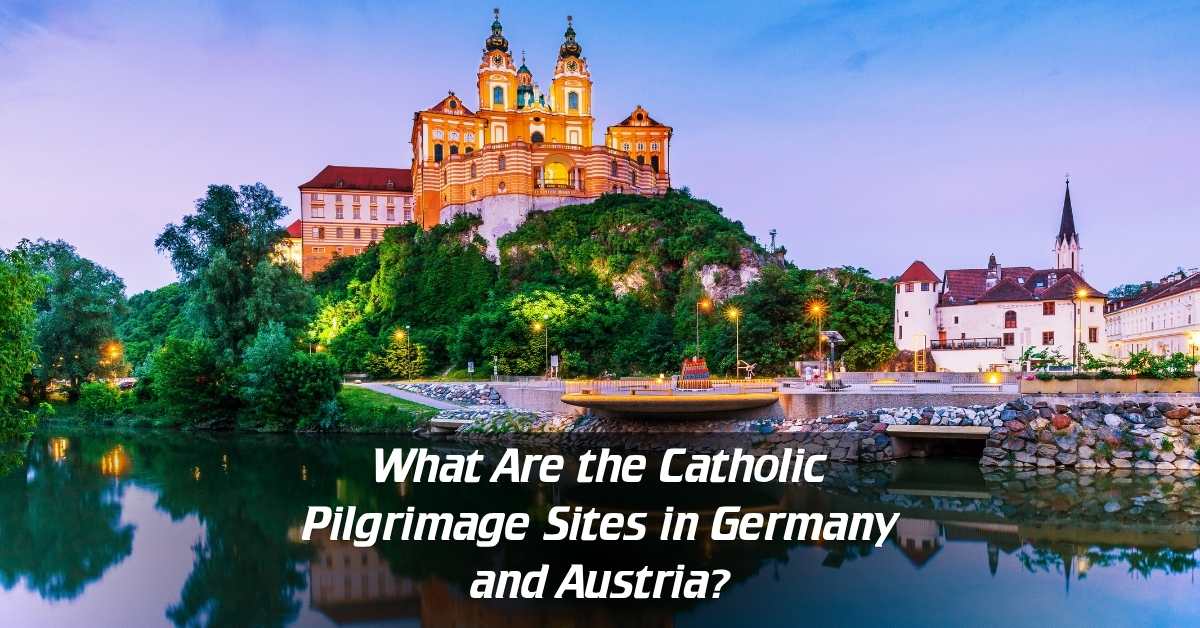
Pilgrims will see many more of Central Europe’s most cherished objects related to their faith at St. Stephen’s Cathedral. We will also take you a short distance from Vienna to the beautiful Wachau Valley to see Melk Abbey, situated on a rocky cliff overlooking the Danube River. This awe-inspiring Benedictine monastery is a Baroque masterpiece, has been an educational, religious, and cultural center since 1089, and houses more than 100,000 medieval texts.
You will be amazed by its glowing, gilded façade, recreated in the 18th century, and the abbey-church, with its 63-meter dome and high altars trimmed with gold leaf. The abbey houses the Shrine of Saint Coloman, who was martyred in Austria in 1012. It holds a splinter of the True Cross of Christ. It has maintained an uninterrupted monastic life in accordance with the Rule of Saint Benedict since 1089.
How Can You Visit the Mariazell Basilica?
If seeing the venerated 12th-century Great Mother of Austria statue in the magnificent Chapel of Grace is on your bucket list, Select International will take you deep into the Styrian Alps to experience the Mariazell Basilica. You may have heard that a Benedictine monk named Magnus received his abbot’s permission to take his small limewood Statue of the Virgin to the Mariazell area in 1157. On the way there, he encountered a boulder in his path that he could not pass.
He later recounted that he prayed to the Mother of God for help, after which the boulder split in half so he could pass. The miracle made the statue’s wondrous powers famous, and it was later named the Great Mother of Austria. Magnus built a small chapel to house the statue, and millions of pilgrims visit the shrine each year to offer up their prayers.
Where Will Your Pilgrimage Take You After Mariazell?
Pilgrims who visit Salzburg, appreciate sacred music, and are loyal to their faith will experience the spectacular alpine scenery and myriad church spires. These spires create an inspirational atmosphere. It’s found right in the federal state capital of the same name.
Prince-archbishops ruled here. They held considerable power. These leaders governed Salzburg, the center of Baroque Catholicism, between 1213 and 1803.
You can walk around the city where Wolfgang Amadeus Mozart composed glorious masses for the magnificent Salzburg Cathedral as a young court musician. Mozart was baptized at the font in the cathedral, which is regarded as an architectural masterpiece. Look up from the city streets, and you will see the Nonnberg Abbey, the oldest inhabited convent in the German-speaking world, where you can hear Gregorian chants daily. From here, we cross over into Germany.
Which Catholic Pilgrimage Sites Will You Visit in Germany?
We follow the road to Munich, the starting point of your trip through the Bavarian Catholic region, rooted in centuries of religious traditions and faith. The Oktoberfest takes place in the city. Although the celebration is well known as a spirited secular occasion, one should remember that it has profound cultural roots in Bavaria’s traditional Catholic harvest thanksgiving. The event opens on the feast of Saint Michael, reflects the region’s historic ritualistic calendar, and celebrates heritage, communal folk traditions, and God’s blessings.
Munich is also home to the Frauenkirche and its twin towers, which house the crypts of archbishops and Bavarian rulers. Pilgrims flock to the statue of Christ in tears at the Wieskirche in Steingaden. This mythical place, where a wooden statue of Jesus wept tears on June 14, 1738, lures visitors from around the world. A short trip outside Munich will bring you to the national shrine or “Lourdes of Germany”, Altötting, where pilgrims seek solace from the Black Madonna.
What Is the Miracle Behind the Oberammergau Passion Play?
The village of Oberammergau nestles quietly in the Ammergau Alps of Bavaria. A historic miracle occurred here in 1633 during the Black Plague. The local villagers asked God to spare their town. They promised to perform the Passion of Christ every ten years if He protected them from the disease. The community hasn’t broken its promise. They’ve stayed true to their word for close to four centuries by faithfully staging the Oberammergau Passion Play.
Residents turn the village into a living testament to the Gospel for the performance. You can gather there with pilgrims from all over the world to witness locals re-enact Jesus’s final days and resurrection.
What Gothic Masterpiece Will You See Next?
Your tour routes you toward the iconic Cologne Cathedral, which completely dominates the Rhine River skyline. It’s a colossal Gothic architectural monument. Master builders spent over 632 years completing this magnificent structure. You can stand beneath its massive twin spires to marvel at centuries of human craftsmanship and devotion. You can view structural guidelines and trip-planning details directly on the official Cologne Cathedral Website. It’s the final resting place of the three Persian kings who traveled far to honor the infant Jesus in Bethlehem.
Countless pilgrims have voyaged to view the Shrine of the Three Magi and pray in this sacred space. You will experience the largest and most creatively multifaceted repository of the Middle Ages, with its magnificent stained-glass windows filled with light, and see the Gero Cross, the oldest surviving crucifix north of the Alps, dating to the 10th century.
Which Catholic Pilgrimage Sites Will You Visit in Switzerland?
The Alpine region of Switzerland offers breathtaking beauty and a mountainous landscape where nature and spiritual devotion converge, creating a journey you may want to remember for years to come. You will encounter historic monasteries, wayside shrines, and high-altitude chapels on your tour. You may even hear the echoing of bells and farmers chanting Alpine blessings that resonate through peaks and valleys as we escort you to Switzerland.
Once in the Alps, you can delight in Einsiedeln Abbey, one of the great Marian pilgrimage sites. The holy martyr and hermit, Saint Meinrad, founded the Benedictine monastery in the 9th century. The Chapel of Grace is at the heart of the complex and was built on the site of Meinrad’s original cell. There you can view the 15th-century statue of the Black Madonna. Catholic pilgrims can join the monks in chanting the Salve Regina at 4:30 every afternoon. This holy sanctuary offers a profound encounter with Christ through the intercession of His Blessed Mother along the Way of Saint James or Via Jacobi.
Where Can You Book a Pilgrimage Tour with Select International?
Don’t hesitate to reach out to Select International Tours with your questions or for advice. We’d love to help you plan your pilgrimage.
Frequently Asked Questions
What is the dress code for visiting historic shrines and cathedrals?
Wear modest attire to enter sacred spaces. Men and women should cover their shoulders and knees. As the Alpine weather can change quickly, take cardigans and scarves so you can cover up when necessary. Make sure you break in your walking shoes to prevent pain while walking, standing, and climbing stairs.
How physically demanding is a pilgrimage through these Alpine countries?
The physical demands of our bus tour are moderate, but it will require stamina. You can expect to walk over uneven terrain, cobblestones, climb stairs, and traverse town and city streets. We suggest you start a walking routine approximately 2 months in advance to build endurance for the uphill walking you may need, as many monasteries and shrines were historically built on hills and mountains.
Will I be able to attend daily Mass, and in what language?
Most dedicated Catholic pilgrimage tours schedule daily Mass. If your tour includes a priest or spiritual director, they will offer Mass in the language most people on the tour speak.
Do I need cash for church donations and candles, or can I use cards?
You will need Euros and Swiss Francs if you want to light votive candles, and coins to give at Mass. Austria and Germany use Euros (€), and Switzerland uses Swiss Francs (CHF). Rural bakeries and small monastic gift shops often refuse cards if you buy small amounts.